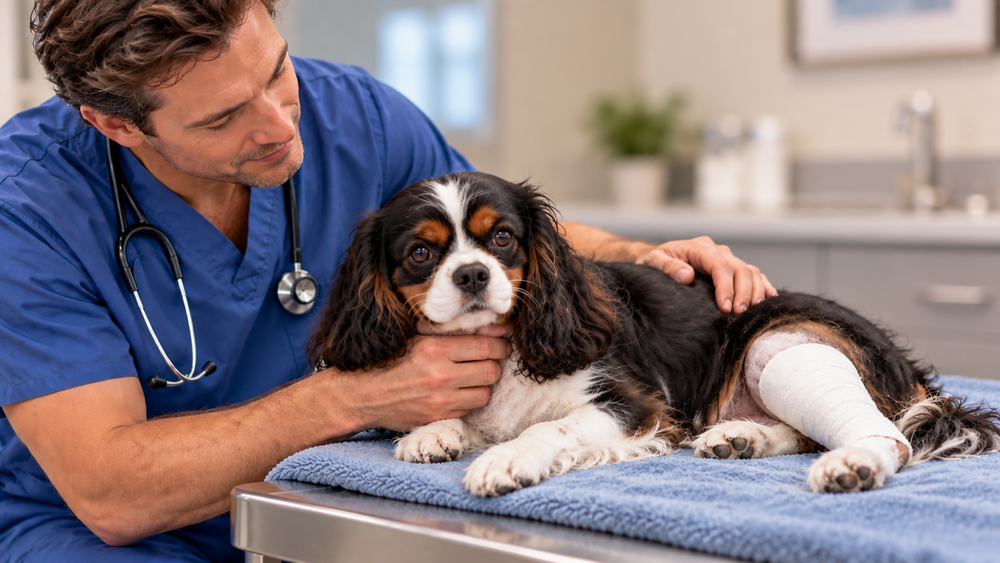
Pet Insurance 101
Pet Insurance 101: What Every Cavalier Owner Should Know
Anyone who has loved a Cavalier King Charles Spaniel knows two things: they are among the sweetest dogs on earth, and they come with a well-documented list of health concerns. Mitral valve disease, syringomyelia, hip dysplasia, patellar luxation, and eye conditions are all more common in the breed than in the general dog population. The combination of a dog you’d do anything for and a real chance of expensive veterinary care is exactly why pet insurance is worth understanding for Cavalier owners.
What pet insurance is (and isn’t)
Pet insurance is a monthly policy that reimburses you for a portion of your veterinary bills when your dog gets sick or hurt. Unlike human health insurance, it usually works on a reimbursement basis: you pay the vet, submit the invoice, and the insurer sends you money back based on your plan’s terms. Most vets don’t need to be “in-network,” so you can keep seeing the clinic you trust.
There are three main types of coverage:
- Accident-only plans cover injuries like a torn ligament, a swallowed sock, or a bad fall, but not illnesses.
- Accident-and-illness plans are the most common. They cover injuries plus diseases and conditions, including diagnostics (bloodwork, X-rays, MRIs), medications, surgery, specialist visits, and hospitalization.
- Wellness add-ons are optional extras that help with routine costs like vaccines, dental cleanings, and annual exams. These aren’t really “insurance” so much as a prepaid budgeting tool, and they’re worth doing the math on.
The one rule that matters most: pre-existing conditions
Pet insurance does not cover conditions that showed symptoms or were diagnosed before your policy started (or during its short waiting period). This is the single most important thing to understand, and it’s why the best time to enroll is the day your dog comes home with you, and before anything is on the record.
For Cavaliers, this matters enormously. A heart murmur noted at a routine exam, even a mild one, will typically make mitral valve disease a pre-existing condition for any policy purchased afterward. The same goes for a scratching episode that a vet mentions might be neurological. Enroll early and those future diagnoses can be covered. If you wait, then they often won’t be.
If you’ve adopted an adult Cavalier who already has a diagnosed condition, insurance can still be very worthwhile. It just may not cover that particular condition. Everything else remains fair game.
What it generally costs
Premiums depend on your dog’s age, breed, location, and the plan you choose. Industry-wide, the average accident-and-illness policy for a dog in the U.S. runs roughly $60 a month, and Cavaliers tend to price somewhat higher than average because of their breed risk. A young, healthy Cavalier might land in the $50–$80 range; an older dog or a plan with a low deductible and high reimbursement rate will cost more. Accident-only plans are much less expensive, often under $20 a month.
You’ll also choose three settings that shape both your premium and your payouts:
- Deductible: The amount you pay out of pocket before coverage kicks in (usually $100–$1,000, often annual).
- Reimbursement rate: The percentage the insurer pays back after the deductible, commonly 70%, 80%, or 90%.
- Annual limit: The maximum the policy will pay per year. Many plans offer $5,000, $10,000, or unlimited.
A higher deductible and lower reimbursement rate lowers your monthly bill but means you pay more when a claim happens. For a breed with a real chance of a big bill, many owners prefer a higher limit and a solid reimbursement rate even if it costs a little more each month.
Two examples of how it works
Example 1: Syringomyelia workup. Your five-year-old Cavalier starts scratching at her neck and yelping when touched. Your vet refers you to a neurologist, who recommends an MRI to check for syringomyelia. The MRI, consultation, and initial medication come to about $3,500. With a $500 annual deductible and 90% reimbursement, you’d pay the $500 deductible plus 10% of the remaining $3,000, or $800 total. The insurer reimburses $2,700. Ongoing medication over the following years would be covered as well, subject to your annual limit.
Example 2: Mitral valve disease management. Your Cavalier, insured since he was a puppy, develops a heart murmur at age seven. Over the next year he has an echocardiogram ($600), two cardiology follow-ups ($400), and starts daily heart medication ($75/month, or $900/year), which is about $1,900 in the first year. With a $250 deductible and 80% reimbursement, you’d pay $250 plus 20% of $1,650, or $580. The insurer covers $1,320, and continues to cover his cardiology care in future years for as long as the policy is active.
In both cases, the alternative without insurance is either paying the full amount or, worse, having to make a medical decision based on money rather than on what’s best for your dog. That’s the real value of coverage: It removes cost from the decision.
A few tips before you buy
- Enroll as early as possible, ideally before your dog’s first vet visit under your care.
- Read the policy’s stance on hereditary and congenital conditions. Most good plans cover them, but not all.
- Check whether the plan covers exam fees, prescription food, rehab, and alternative therapies if those matter to you.
- Look at annual limits and any per-condition caps. Unlimited or high-limit plans are worth a serious look for this breed.
- Expect premiums to rise as your dog ages and as vet costs go up generally. That’s normal across the industry.
Pet insurance won’t make veterinary care free, but it turns an unpredictable, potentially large expense into a predictable monthly one. And for a Cavalier, that peace of mind is hard to overstate.
By Jeffrey Hanschmann
Need help choosing a plan?
PIPA Broker is a licensed, independent pet insurance marketplace based in Washington State. Because PIPA is a broker rather than a single insurance company, they can compare plans from multiple carriers and help you find coverage that fits your Cavalier and your budget — with no bias toward any one provider. PIPA partners with rescues and shelters, including Cavalier Rescue USA, to help new adopters get their dogs protected from day one, and a portion of PIPA’s commission per policy placed through this partnership supports Cavalier Rescue’s work.
Visit PIPA to compare plans or get in touch with a licensed advisor.
