
Training a Deaf Cavalier
Welcoming a new dog into your home can be a very rewarding experience, but not without challenges. If you are fostering or adopting a deaf dog, those challenges may seem a bit concerning, but rest assured, it is well worth the effort. You are already taking the important first step by researching the topic.
Training a deaf dog is quite similar to training a hearing dog. If you have access to the former owner of the dog, get as much detailed information as you can regarding how they trained the dog, if they did, and what specific signals they used.
Below are some key principles for training hearing impaired or deaf dogs.
Teach One Signal That Matters Most: “Look at Me”
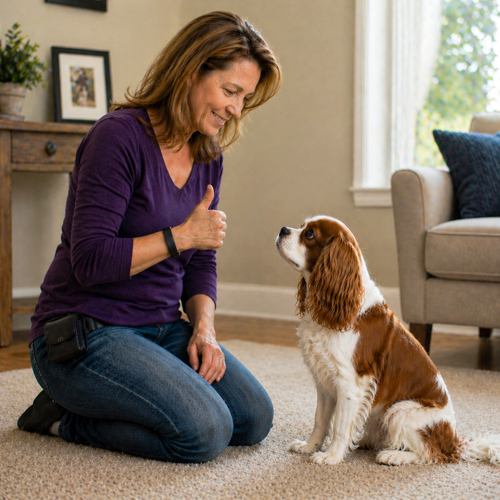
This is your foundation for everything else.
- How to do it
- Wait until your dog naturally glances at you
- Immediately give a thumbs-up (your “yes”)
- Reward with a treat
Repeat this frequently, whenever you can.
- Once it clicks, you can:
- Add a small hand motion near your eyes.
- Use this anytime you need their attention.
- Follow it up with signaling them to sit, stay, follow you and so on.
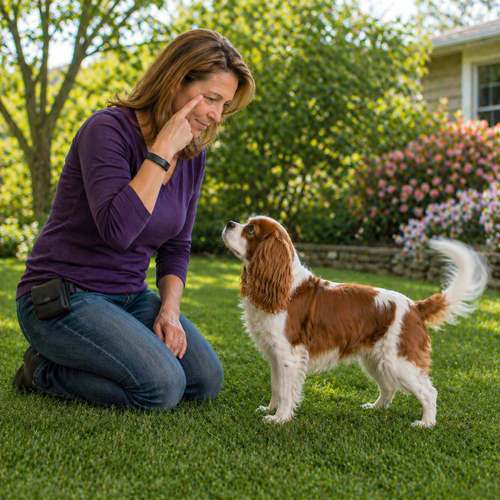
- Use Visual and Tactile Signals: Common Commands & Signals
- Sit: Raise your hand with palm up.
- Stay: Extend your palm forward like a stop sign.
- Come: Sweep your hand toward your chest.
- Lie Down: Lower your hand toward the ground.
- Each command should have a distinct, clear signal to avoid confusion.
Deaf dogs rely on hand signals, body language, or gentle touches to communicate. Hand signals can be customized, or based on American Sign Language (ASL). Tactile cues, like a gentle tap can be effective.
- Positive Reinforcement
Reward based training is essential. Treats, toys, and praise should be given immediately when the dog responds with the desired behavior. Since you can’t say “good dog,” you need a clear reward marker, like 2 thumbs up.
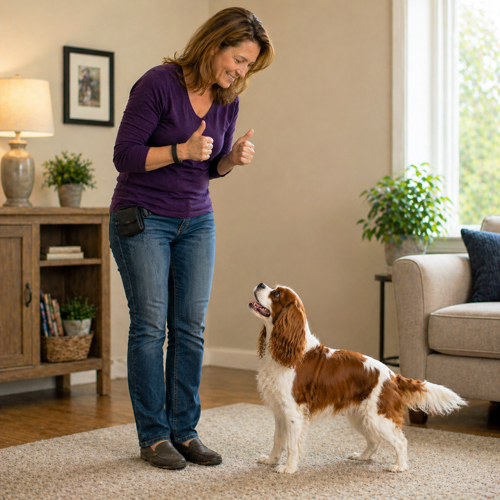
- Consistency is Crucial
Always use the same signals for the same commands and make sure all household members adhere to this.
- Safety Considerations
Deaf dogs will not hear dangers like traffic or other animals. Use leashes, fenced areas, and baby gates to create a safe environment. Also, be careful not to startle a sleeping dog. If you need to wake your pup, don’t touch their face. Rather, touch their back end gently.
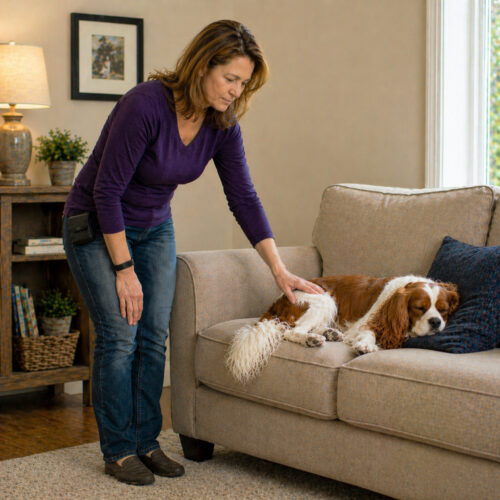
- Additional Tips
- Avoid startling your dog with sudden movements. Approach slowly and offer an open palm to allow investigation.
- Incorporate play and rewards into training to make learning enjoyable and to strengthen your bond.
Training a deaf dog may take longer initially, but with patience, deaf dogs can learn the same behaviors as hearing dogs. With consistency, patience, and positive training, deaf dogs can live happy, well behaved and safe lives. They will respond reliably to visual and tactile cues while forming a strong bond with their human family.
There are many resources online. Here is a link to the AKC’s guide.
Deaf Dog Training: How to Train and Care for a Deaf Dog

By Nancy Holab Nevins
